Love Through a Prism
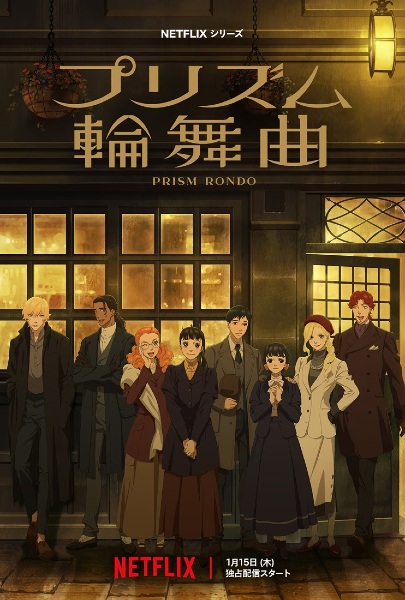
Synopsis — from MyAnimeList
In early-1900s London, Lili Ichijouin, a Japanese exchange student travels to England to enroll in the prestigious Saint Thomas Art Academy. Determined to become a painter, she arrives under pressure: her parents expect her to rise to the top of her class within six months or return home. Lili's drive intensifies when she encounters Kit Church, a gifted aristocratic student known for his talent and detachment. While Kit has devoted himself entirely to painting, Lili's sincerity and resilience begin to shift something in him. The two share little beyond their love for art, yet their relationship quickly becomes central to life at the academy.
Audience Consensus
Prism Rondo is a visually stunning anime praised for its artistic direction, atmospheric soundtrack, and heartfelt portrayal of creative struggle. However, opinions are divided on its narrative execution, with many finding the central romance frustratingly underdeveloped and the pacing uneven. While some viewers are deeply moved by its emotional sincerity and relatable characters, others are disappointed by cliché writing and a lack of depth in its thematic exploration.
Strengths
- Stunning and poetic visual direction, with meticulous attention to color, lighting, and background design that effectively conveys atmosphere and character emotions.
- Sincere and heartfelt portrayal of artistic struggle, self-doubt, and the creative process.
- Relatable and human characters with genuine emotional depth and nuanced development, even for side characters.
- Emotional impact and resonance, with some viewers finding it deeply moving and inspiring, even rewatching it.
- Subtle and beautiful soundtrack that enhances emotional moments without being intrusive.
Weaknesses
- Underdeveloped and frustrating romance due to lack of communication between the leads, feeling unearned and cliché for some.
- Inconsistent narrative structure and pacing, with some arcs feeling too long and resolutions compressed.
- Weak character writing for the main characters, who can be perceived as obnoxious, self-entitled, or frustratingly obtuse.
- Lack of depth in exploring the artistic themes and historical context, feeling superficial despite the premise.
- Anachronisms and historical inaccuracies detract from the authenticity of the setting and period.
- Underutilization of subplots and side characters, with some character arcs feeling rushed or underdeveloped.