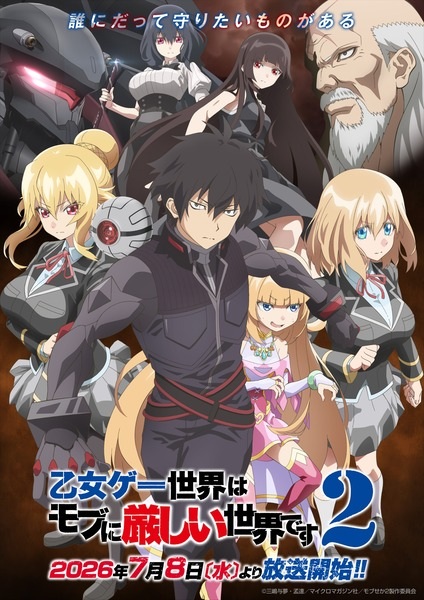
Trapped in a Dating Sim: The World of Otome Games is Tough for Mobs 2
6.9
Quality Score
0.21 (Mild Positive)
Audience Mood
7 / 10
Controversy
28,141
MAL Ratings
Synopsis — from MyAnimeList
Second season of Otome Game Sekai wa Mob ni Kibishii Sekai desu.
Audience Consensus
Audience reception for Season 2 is sharply divided, primarily due to a significant perceived downgrade in animation and character design quality compared to the first season. While the story, protagonist's personality, and humor remain strong selling points for some, a large portion of viewers find the visual aspects and narrative attempts at seriousness detrimental to the overall experience.
Strengths
- The story and plot progression remain engaging, drawing from strong source material.
- The protagonist, Leon, is consistently praised for his entertaining and unique personality (sarcastic, petty, arrogant).
- The world-building, blending otome game elements, nobles, magic, and mechas, is noted as surprisingly cohesive and fun.
- The humor and the show's willingness to not take itself too seriously are highlighted as key strengths.
- The dynamic between Leon and Luxion is a strong point for many viewers.
- The ending sequence is noted as having good visuals and animation.
- Some reviewers found the animation cleaner and character proportions more consistent than Season 1.
- The plot development and character growth are visible from a lore perspective.
Weaknesses
- The animation quality and character designs are widely criticized as a significant downgrade from Season 1, appearing flatter, less expressive, and more generic.
- Character movements are often described as stiff, and action scenes lack impact.
- The overall production quality is perceived as low-effort and rushed, with backgrounds looking like generic assets.
- The humor and voice acting quality are noted as declining compared to Season 1.
- The music and soundtrack are considered mid or lacking enthusiasm.
- The series struggles to balance its comedic tone with attempts at more serious themes like war and loss, leading to a disjointed and unearned emotional impact.
- Characterization beyond the main protagonist and Marie is frequently described as flat, static, and NPC-like.
- The handling of social issues (matriarchy) is criticized as shallow, inadequate, and potentially reinforcing patriarchal values.
- Flashbacks using Season 1's art style create a jarring discrepancy with Season 2's visuals.