Flash Kicker
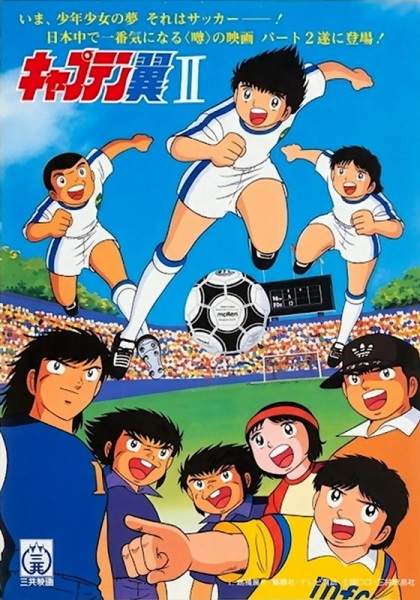
Synopsis — from MyAnimeList
Captain Tsubasa is the passionate story of an elementary school student whose thoughts and dreams revolve almost entirely around the love of soccer. 11-year-old Tsubasa Oozora started playing soccer at a very young age, and while it was mostly just a recreational sport for his friends, for him, it developed into something of an obsession. In order to pursue his dream to the best of his elementary school abilities, Tsubasa moves with his mother to Nankatsu city, which is well-known for its excellent elementary school soccer teams. But although he was easily the best in his old town, Nankatsu has a lot more competition, and he will need all of his skill and talent in order to stand out from this new crowd. He encounters not only rivals, but also new friends like the pretty girl Sanae Nakazawa and the talented goalkeeper, Genzo Wakabayashi, who shares the same passion as Tsubasa, and will prove to be a treasured friend in helping him push towards his dreams. Representing Japan in the FIFA World Cup is Tsubasa’s ultimate dream, but it will take a lot more than talent to reach it.
Audience Consensus
Audience reception is heavily split between nostalgic love and critical assessment of its dated production and narrative elements. While many cherish it as a childhood cornerstone that inspired a love for soccer, others find its animation, pacing, and protagonist's development lacking by modern standards. The show's impact on a generation is undeniable, but its objective quality is a point of contention.
Strengths
- Inspirational and formative for many viewers, fostering a love for soccer and sports in general.
- Captures the passion and dreams of pursuing a sport, with charismatic and endearing characters (beyond the protagonist).
- Strong sense of friendship, rivalry, and teamwork that resonates with viewers.
- Nostalgic value for those who grew up with it, evoking strong childhood memories.
- Optimistic story centered on friendship and love for football.
Weaknesses
- Animation and art style are considered dated and not the best, with repetitive character expressions.
- The protagonist, Tsubasa, is criticized for a lack of character development and being overly 'boosted' or plot-armored.
- Pacing issues with extremely long fields and drawn-out matches, which can be boring for modern viewers.
- Sound design and music are considered average for the era.
- May bore modern audiences accustomed to faster-paced or more complex narratives.