Mobile Suit Gundam I
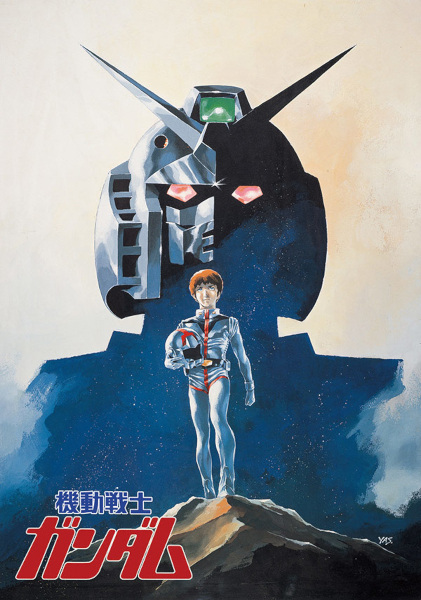
Synopsis — from MyAnimeList
In the future, with Earth's population rapidly increasing, humanity has developed giant orbiting space colonies gathered in clusters known as "Sides." As the elites on Earth force most of the populace into space, rebellion begins to brew. In the year Universal Century 0079, one of the colony clusters known as Side 3 declares itself the Principality of Zeon and launches a war of independence against the Earth Federation. Despite having only a fraction of the resources of the Federation, Zeon quickly gains the upper hand in the conflict through the use of giant humanoid robots called mobile suits. Chief among Zeon's mobile suit ace pilots is Char Aznable, a mysterious masked man known as the "Red Comet." When Char's squadron comes across the Federation developing its own prototype mobile suit called Gundam in the colony Side 7, his men launch a brutal attack. Amuro Ray, the son of the prototype's developer, gets in the Gundam and is able to fend off the Zeon attack. As Amuro soon finds himself directly in conflict with Char, he is forced to flee the colony on a Federation ship.
Audience Consensus
Audience consensus largely regards Mobile Suit Gundam I as a foundational classic, praised for its compelling characters, epic war narrative, and iconic designs. While acknowledging its dated visuals and pacing issues inherent to its compilation format, most agree it remains an influential and important entry in the mecha genre.
Strengths
- Compelling characters, particularly Amuro and Char, with strong development arcs.
- Engrossing and epic war story that explores the harsh realities of conflict and its impact on young soldiers.
- Iconic and influential mecha designs that remain visually striking.
- Excellent sound design and voice acting that enhance the immersive experience.
- Strong world-building that establishes the Universal Century setting effectively.
- Thematic depth exploring the "gray area" of war and the psychological toll it takes.
Weaknesses
- Pacing issues, with sections feeling rushed or dragging, especially in the condensed movie format.
- Dated animation and art style, with some scenes exhibiting inconsistent quality and '70s anime hallmarks.
- Uneven character development for the supporting cast, leading to some feeling underdeveloped or one-dimensional.
- Thematic elements, particularly the 'moral greyness,' are sometimes undermined by overt portrayals of villains.
- Some dialogue can be perceived as cheesy or melodramatic.
- The plot can feel formulaic and predictable at times, with obvious 'death flags'.