Only Yesterday
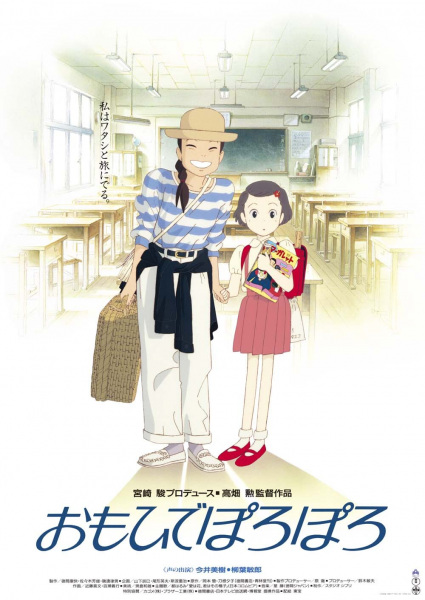
Synopsis — from MyAnimeList
Taeko Okajima is a 27-year-old, independent woman who spent her entire life in Tokyo. Looking to unwind from the rush of the big city, she decides to visit her family in the country to help out during the harvest. On the train there, Taeko vividly recalls her memories as a schoolgirl in the initial stages of puberty, as if she is on a trip with her childhood self. A young farmer named Toshio picks her up at the station, and they quickly develop a friendship. During her stay, Taeko forms strong bonds with family and friends, learning the contrasts between urban and rural life, as well as the struggles and joys of farming. Nostalgic and bittersweet, Omoide Poroporo takes on Taeko's journey as an adult woman coming to terms with her childhood dreams compared to the person she is today.
Audience Consensus
Omoide Poroporo is widely praised for its mature themes, realistic portrayal of life, and artistic direction, often hailed as a Studio Ghibli masterpiece. However, a notable minority found the slow pacing and lack of overt plot to be a significant drawback, leading to a mild division in audience reception.
Strengths
- Masterful direction and realistic portrayal of human experience.
- Exceptional script that captures the power and impact of memory.
- Superb acting, with natural and believable voice performances.
- Stellar Ghibli visuals with unique hyperrealistic character depictions and nuanced facial expressions.
- Thematic depth achieved through innovative use of color and visual design to explore self-discovery.
- Realistic dialogue and interactions that create a profound sense of immersion.
- The film's mature handling of relatable themes like childhood dreams versus adult reality resonates deeply with viewers.
Weaknesses
- Some viewers found the pacing too slow or the plot to be uneventful and boring.
- Certain characters were perceived as unlikeable, mean-spirited, or simply bland.
- The transition between past and present timelines was jarring or felt disjointed for some.
- The romantic subplot was considered underdeveloped or clichéd by a minority.
- The art style, particularly character designs, was polarizing, with some finding them odd or unappealing.
- The film's